

Laser Cleaning vs Sandblasting vs Dry Ice: Which One Costs Less Per Job?
Compare laser cleaning, sandblasting and dry ice blasting by cost per finished part: cycle time, energy, consumables, labour and the removal of specific surface layers.
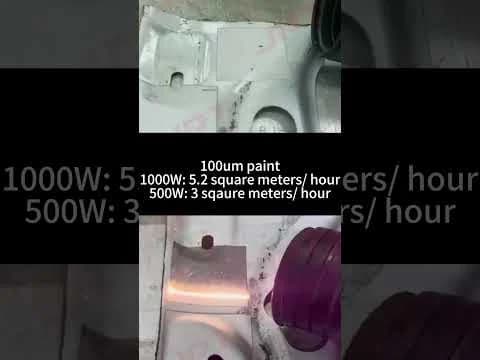
Buyers comparing surface preparation methods rarely compare the same thing. A sandblaster is quoted per hour of blasting with an abrasive stream. A dry ice blaster is quoted per hour with a frozen pellet supply. A laser cleaner is often quoted per machine, which sounds expensive until you work out what an hour of that machine actually removes. The useful comparison is cost per finished part, and that number is assembled from several separate figures that suppliers rarely put on one page.
Build the comparison from four separate figures
Start with the part. Measure the treated area and identify the surface layer to be removed: light rust, heavy mill scale, paint, oil, or a combination. The same method gives very different results on a bracket with surface rust and a casting with scale. Then collect four numbers for each method, in the same units.
First, the time to complete one part, measured from picking up the part to putting it down, including repositioning and any repeat passes. Second, the energy or consumable used during that time. Third, the labour rate and the operator time per part. Fourth, the cost of handling the removed material, which for laser cleaning means extraction and filtration. Keep consumables visible as a separate line, because abrasive and dry ice are consumed continuously while a laser does not consume the surface itself.
A useful discipline is to record what the comparison excludes. A quoted cleaning rate that counts only laser-on time and ignores scanning, masking and inspection is not comparable with a blasting rate that includes handling. Ask every supplier for the same definition of a cycle.
What the hardware actually changes
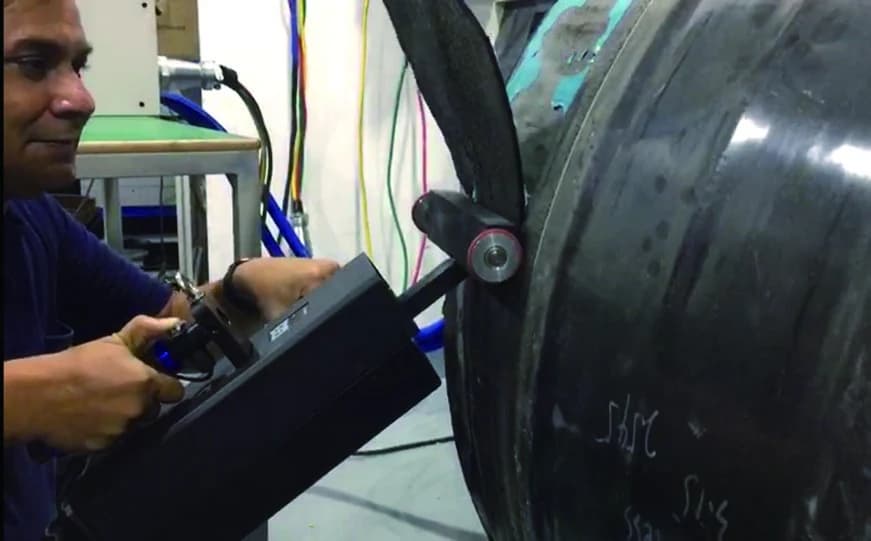
The physical differences between the methods show up in the numbers above. A laser cleaner removes material without a contact tool, so there is no abrasive to consume and no wear on the workpiece surface. Among the JSY configurations, the portable units use a small scanning head: the 200W to300W portable cleaner covers a 130mm scanning width, offers pulse energy options of 1.5, 5 and 10 mJ, and runs air-cooled on a single 220V supply with a 5m fibre cable. That combination suits smaller parts and work that has to travel between sites rather than a fixed production cell.
Wider work is handled by higher-power systems. The air-cooled 2000W cleaner offers an adjustable cleaning width up to 500mm with a 1kg cleaning gun on a 70kg machine, running from a 220V or 380V supply as configured. Its continuous 2000W sibling draws 5000W of power for the same 2000W of laser output, which is the practical difference between a pulsed and a continuous source when you are working in one area for a long shift. The 3000W handheld continuous unit runs on three-phase 380V and weighs 180kg as a machine, so it is fixed-position equipment rather than a tool carried around a workshop.
These figures describe the machines. They do not, on their own, tell you which is cheaper for your part.
Where laser cleaning earns its price
Two situations consistently favour laser cleaning, and both are about what you avoid rather than what you save.
The first is thin or machined surfaces that cannot take abrasive impact. Laser cleaning does not contact the workpiece, so there is no risk of peening a thin casting or rounding an edge. For manufacturers who already reject parts after blasting damage, that avoided rework changes the calculation more than the hourly rate does.
The second is the removal of specific surface layers where the underlying material has a usable surface already. Laser cleaning is selective: it can remove an oil film or light surface rust while leaving a functional coating or a marking beneath it. Sandblasting and dry ice clean uniformly whether or not the layer below is wanted. The JSY demonstration comparing pulse energy settings on carbon steel illustrates how the result depends on the specific setup rather than on the machine name.
Where the other methods still win
Blasting and dry ice remain cheaper for heavy scale, thick paint and large castings where removal is the only objective and the workpiece can take it. Dry ice cleans without adding moisture and leaves no residue behind, which matters in food, foundry and electrical work. Abrasive blasting handles heavy mill scale at a rate that most laser configurations will not match on a thick layer, and the abrasive is cheap compared with the labour it replaces.
There is a middle case worth testing rather than assuming: a part with light surface contamination that also needs a good surface finish. Laser cleaning followed by a light abrasive pass often costs less than blasting to full removal, and it is the combination most often compared in cost terms.
Ask for a measured cycle, not a rate
The most useful figure any supplier can give you is the time to clean a specific part, with the settings, the layer removed and the acceptance criterion stated. The JSY article on preparing a laser-cleaning sample test sets out how to define that test so the results from different methods can be compared on the same basis.
When you have those figures, compare the same part cleaned the same way by each method, with extraction and consumables included. That comparison usually settles the question faster than a specification sheet, because it reflects your parts and your acceptance criteria rather than a general rate.
For a starting point on the equipment side, JSY laser-cleaning equipment covers portable pulse units through to 3000W continuous systems, and the rust removal application page shows the surface conditions these configurations are typically discussed for.
Send your part details to JSY with the material, the surface layer, the part dimensions and the next operation in your process. That gives the team enough to discuss a suitable configuration and what a sample evaluation should demonstrate for your specific job.