

How to Properly Choose Between Gaussian and Tophat Laser Cleaning Machines in the Laser Cleaning Process
? Laser cleaning has emerged as an environmentally friendly, non-contact method for removing contaminants such as oxidation layers, rust, and coatings from metal surfaces. With the continuous…
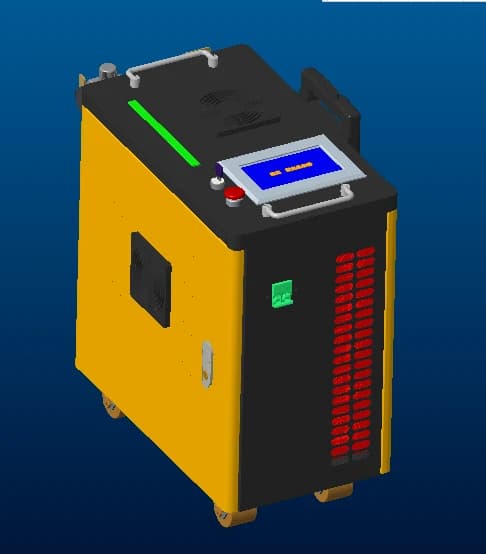
How to Properly Choose Between Gaussian and Tophat Laser Cleaning Machines in the Laser Cleaning Process?
Laser cleaning has emerged as an environmentally friendly, non-contact method for removing contaminants such as oxidation layers, rust, and coatings from metal surfaces. With the continuous development of laser technology, the shape of the laser beam has become increasingly important in determining cleaning effectiveness. Among the various beam profiles, the differences between Gaussian and Tophat beams have become a hot topic in the industry. So, how can one correctly choose between a Gaussian laser cleaning machine and a Tophat laser cleaning machine based on different requirements and workpiece characteristics?
1. Fundamental Characteristics of Gaussian and Tophat Beams
Gaussian Beam
A Gaussian beam features an energy distribution that follows a bell-shaped curve, with the highest energy density concentrated at the center and gradually diminishing toward the edges. This distribution leads to the following:
- Advantages
- High Energy Density: The central focused area quickly reaches the high temperature needed for cleaning, making it suitable for removing stubborn contaminants such as thick oxidation layers or rust.
- Lower Cost: Generally, the structure of a Gaussian laser is simpler, resulting in a lower system cost.
- Disadvantages
- Risk of Localized Damage: Due to the excessively high energy in the center, there is a risk of thermal damage to the substrate during the cleaning process.
- Uneven Energy Utilization: The lower energy at the edges may lead to insufficient cleaning in those areas.
Tophat Beam
A Tophat beam, on the other hand, has an energy distribution that is uniform across the entire beam profile:
- Advantages
- Uniform Energy Distribution: This ensures that the entire area being cleaned receives consistent energy, resulting in a lower surface roughness after cleaning and minimal damage to the substrate.
- High Cleaning Precision: It is ideal for applications that require high surface quality post-cleaning, such as precision molds, aerospace components, and electronic devices.
- Disadvantages
- Lower Peak Energy: Due to the more gradual energy distribution, cleaning thicker or more stubborn contaminants may require a higher laser power.
- Higher System Cost: Achieving a Tophat beam typically involves additional beam shaping components, which increase the design and manufacturing costs of the system.
2. Key Factors to Consider When Choosing
When selecting the type of laser beam for a cleaning process, the decision should be made based on the following considerations:
1. Characteristics of the Substrate and the Contaminant
Low Tolerance for Substrate Damage
When the workpiece can tolerate some local thermal damage or when the contaminant is particularly stubborn, a Gaussian laser cleaning machine—with its high energy density in the center—can remove contaminants more thoroughly. For example, it is often effective in treating thick oxidation layers or rust on metal surfaces.High Requirements for Substrate Integrity
If the workpiece has strict requirements regarding dimensions, surface roughness, or substrate integrity (such as in electronic components, aerospace parts, or precision molds), a Tophat laser cleaning machine is more suitable because its uniform energy distribution minimizes substrate damage.
2. Process Parameters
Laser Power and Pulse Energy
Under the same power conditions, a Gaussian beam will form a higher energy density at the focal point, which might lead to overheating issues. For processes requiring a high instantaneous energy to break down stubborn contaminants, a Gaussian beam might be preferable; however, for a gentle and even cleaning process, a Tophat beam provides more uniform energy distribution.Cleaning Speed and Scanning Method
The scanning speed and pulse repetition rate also affect the cleaning outcome. With a Gaussian beam, a slower scanning speed might be necessary to ensure complete removal of contaminants, while the uniform energy distribution of a Tophat beam can allow for faster processing and improved production efficiency.
3. Cost and System Complexity
System Cost
Gaussian laser cleaning machines generally have a simpler system structure and are lower in cost, making them suitable for applications with budget constraints or where the substrate’s tolerance for minor damage is acceptable.System Stability and Maintenance
Although Tophat laser cleaning machines require a higher initial investment, their better control over substrate temperature during cleaning can lead to lower long-term maintenance costs and higher stability, making them ideal for high-demand industrial applications.
3. Comparison of Typical Application Scenarios
Suitable Applications for Gaussian Laser Cleaning Machines
- Rough Surface Treatment on Metals: Such as rust removal, oxidation layer removal, or pre-treatment before coating.
- Refurbishment of Workpieces: Effective in thoroughly removing surface dirt and rust during refurbishment processes.
Suitable Applications for Tophat Laser Cleaning Machines
- Cleaning of Precision Components: In industries like aerospace, electronics, and mold manufacturing where post-cleaning surface quality is critical.
- Fine Surface Processing: For processes that require uniform cleaning without altering the substrate’s dimensions or state.
4. How to Make the Right Choice in Practice
When selecting a laser cleaning machine in practice, consider the following steps:
- Define the Cleaning Objective: Clearly identify the type and thickness of the contaminant to be removed and evaluate the substrate’s tolerance for thermal effects.
- Evaluate Device Parameters: Compare the laser power, pulse energy, scanning speed, and other relevant parameters to match the specific requirements of the workpiece.
- Conduct Experimental Verification: Perform small-scale trials on sample pieces and evaluate the cleaning results using tools like scanning electron microscopy or surface roughness measurements.
- Consider Cost-Effectiveness: Choose the solution that offers the best balance between cleaning quality and overall cost.
5. Conclusion
In summary, both Gaussian and Tophat laser cleaning machines have their own advantages and drawbacks. The correct choice should be based on the characteristics of the workpiece, the cleaning requirements, the system parameters, and cost considerations. For scenarios that demand thorough removal of stubborn contaminants and can tolerate some substrate damage, a Gaussian laser is advantageous. Conversely, for applications that require fine, uniform cleaning with minimal substrate impact, a Tophat laser is the more ideal option. By matching the parameters appropriately and conducting preliminary tests, the laser cleaning process can be both efficient and safe.
This comprehensive guide is intended to help you make an informed decision when selecting a laser cleaning machine for different cleaning requirements.