
Weld preparation & cleanup
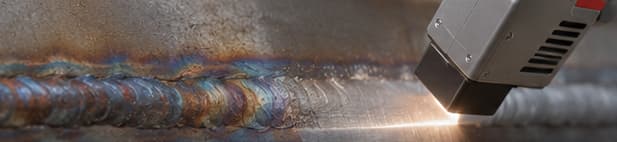
Surface cleaning around the joint area before and after welding.
Prepare the joint area. Clean the surface around the seam.
Weld-related cleaning addresses surface material around a joint rather than joining the metal itself. Before welding, the aim may be to remove accessible oxides or unwanted surface layers from the joint zone. After welding, cleaning can address surface oxidation around a completed seam, according to the material and the required next step.
Where it fits
Joint preparation
Treat accessible surfaces along the planned joining area.
Post-weld surfaces
Evaluate removal of surface oxides and discoloration around completed seams.
Defined cleaning zones
Concentrate treatment around joints, edges and local finishing areas.
From joint geometry to local surface treatment
Locate the joint zone
Distinguish weld preparation from cleaning a completed seam.
Plan beam access
Account for corners, fixtures and the changing angle along the joint.
Assess the next operation
Check the cleaned surface against finishing or inspection requirements.
What controls the process?
- Material and surface layer
- Steel grades, oxides and existing finishes respond differently.
- Seam geometry
- Raised beads, tight corners and recessed joints affect access and coverage.
- Process sequence
- Pre-weld preparation and post-weld cleanup require different acceptance criteria.
Compare cleaning systems
Is this the same as laser welding?
No. Cleaning removes surface material around a joint. Laser welding is a metal-joining process with its own joint design and equipment requirements.
Can all weld discoloration be treated identically?
No. The base material, oxidation, geometry and required finish influence the treatment. Corrosion resistance and other final requirements need separate consideration.