


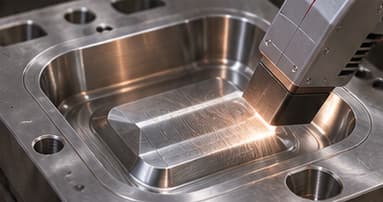
Precision cleaning
Targeted removal of deposits from accessible tooling and component surfaces.
Focus on the deposit and the detail that must remain.
Precision cleaning places emphasis on a controlled treatment area and the condition of the underlying feature. Tooling, molds and machined surfaces can carry different deposits and finishes. The process should be selected around the actual material, deposit and dimensional or visual requirement, rather than a general no-damage claim.
Where it fits
Molds and tooling
Evaluate deposits on accessible mold cavities and tool surfaces.
Machined features
Work within defined treatment areas on exposed component details.
Local maintenance
Address selected deposits without assuming the entire assembly is suitable for treatment.
From a detailed feature to a controlled treatment zone
Identify the critical feature
Record the material, surface finish and detail that must be retained.
Define optical access
Consider focus, recesses and the line of sight to the deposit.
Review the result
Assess cleanliness alongside dimensional and surface-finish requirements.
What controls the process?
- Deposit type
- Carbonaceous residue, oxides and coatings can require different strategies.
- Feature geometry
- Small recesses and shadowed areas can limit optical access.
- Surface sensitivity
- Fine finishes, edges and thin sections need an appropriate process window.
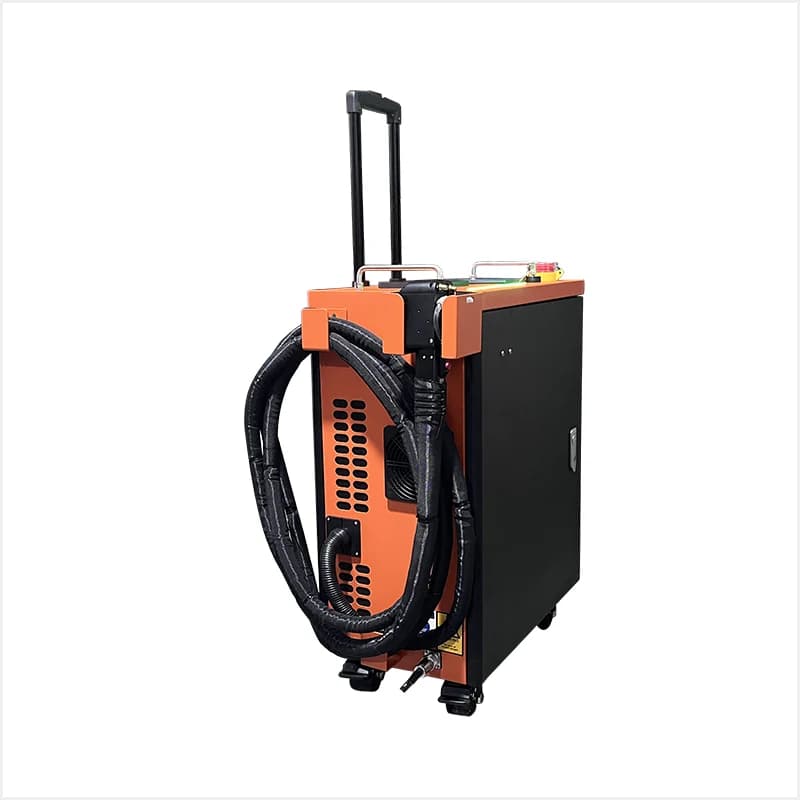
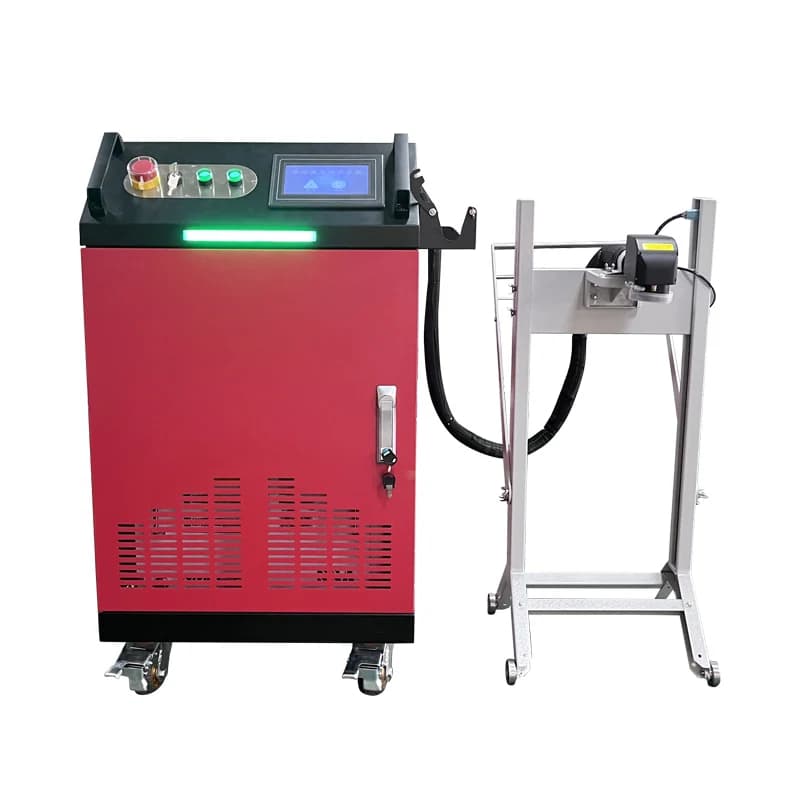
Compare cleaning systems
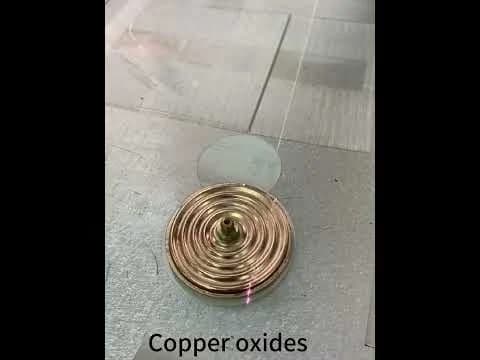 See the process in action
Can the laser reach every recess?
Laser treatment needs optical access. Deep or shadowed features can require a different orientation, tooling or cleaning method.
Does precision cleaning guarantee no surface change?
No blanket guarantee applies. The treatment must be evaluated against the material, geometry and required finish of the actual component.