


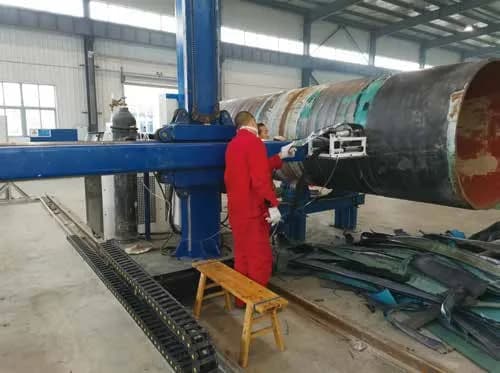
Induction fireproofing and heavy coating removal
Remove intumescent fireproofing and thick industrial build-up coatings from steel structures.
Thick, tenacious coatings need a controlled approach.
Fireproofing, intumescent coatings and heavy epoxy build-ups are among the most difficult coatings to remove. They are thick, they are resilient, and they are often applied where the steel is structural and cannot be heated freely. Induction heating works on the bond between the coating and the steel, so it can release a layer that mechanical methods struggle with. Whether it is suitable depends on the fire protection material itself, the thickness, the position of the work and the surface requirement of the coating system that follows.
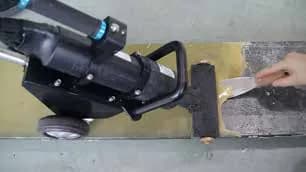
Where it fits
Fireproofing removal
Consider intumescent and cementitious fire protection where the steel has to be inspected or re-protected.
Heavy build-up coatings
Assess thick epoxy and multi-layer systems that have to be taken off for renewal.
Structural steel renewal
Plan the removal where a protective system has to be replaced on structural steel.
From heavy coating to bare steel
Identify the protection material
Establish the type of fire protection or build-up coating, its thickness and whether it can be heated at all.
Check the structure below
Look at the steel section, the connections and the access, because the removal method has to suit the member.
Release and collect
Loosen the coating, scrape and collect the debris, and check the steel for the condition the new protection needs.
What controls the process?
- Fire protection material
- Fire protection materials differ widely, and some of them are not suitable for heating.
- Coating thickness
- The thicker the layer, the longer the heat has to be applied and the more the removal rate depends on the test result.
- Access and working height
- Working above ground on a structure adds its own access, safety and collection requirements.
Compare cleaning systems
Can fireproofing be removed with induction heating?
It depends on the material. Some fire protection systems can be released by heating and others cannot, and the decision is made from a test on the actual coating rather than from a general description.
What happens to the steel after the fireproofing is removed?
The steel is inspected for the condition the new protection requires, and preparation is often needed before the replacement system is applied.